Chinese essential-qualities-oriented education reform in basic education is reaching a crucial stage. And at the same time, this August Finnish primary and secondary schools are starting the first semester after the new curriculum reform is implemented. This new reform aims at shifting the focus from “what to learn” to “how to learn”.
The program for International Student Assessment (PISA) is a worldwide study done by the Organization for Economic Cooperation and Development (OECD). It started in the year 2000 and then implemented every three years. Both Finnish and Chinese students are among the top performers in the PISA test.
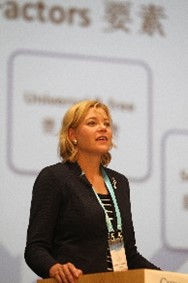
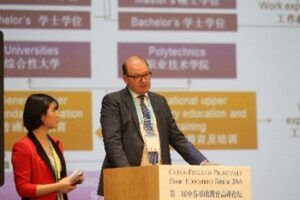
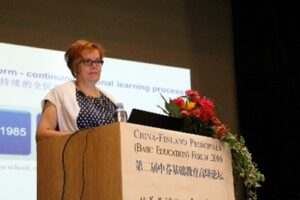
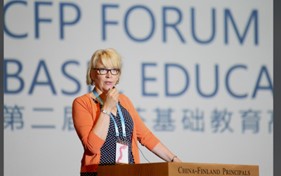
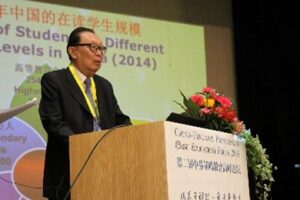
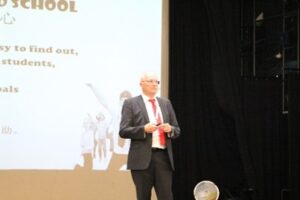
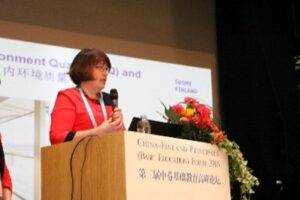
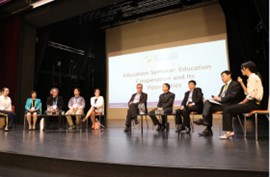
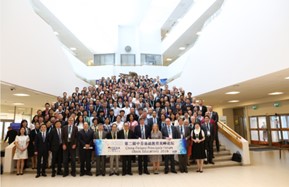
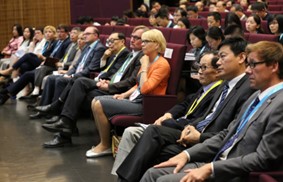
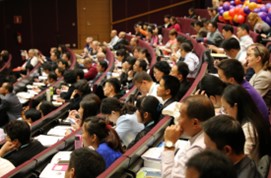
This new round of Finnish curriculum reform is focusing on improving the students’ competencies in adapting to modern society. But will this new reform help Finland to continue its leading advantage in education? We had the opportunity to interview some education experts from both China and Finland during the 2nd China-Finland Principals (Basic Education) Forum (CFP 2016), which was organized by Finland-China Education Association (FICEA) and the Finnish International Education Innovation Research Institute (FEDUCATION), to find out what they say about education reforms.
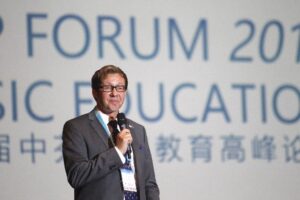
“The new curriculum outline requires the students not only to accept the information but also to understand the importance of the information,” said Mr. Jari Anderssson, who is the president of FEDUCATION and principal of Finland Sylvään school. He mentioned that one of the teaching methods is “phenomenon teaching”, which breaks the boundaries of different subjects. For example, the topic of “climate change” covers knowledge from different subjects, such as geography, biology, and so on. And the topic of “united nations” covers the knowledge of English, geography, history, and other subjects. “We have opened phenomenon classes on a regular basis in Sylvään school ,” added Mr. Jari.
The new curriculum outline also requires the teachers to look for the answers with the students instead of simply teaching knowledge. Teachers should try to keep the students’ passion for studying rather than pointing out the right or wrong answers immediately. Also teachers should be able to inspire the students to discover their own strengths and weakness and help them to explore their own potential. In order to help the students to think independently and to communicate with different cultures, part of the standardized exams is canceled. At the same time, self-evaluation and peer evaluations are added to the new curriculum outline.
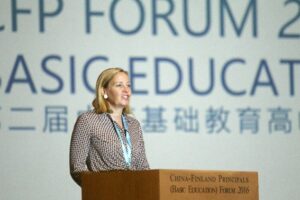
Ms. Saana Lauslahti, vice-chairperson of the Ministry of Education and Culture and chairperson of CFP 2016, told us, “The world is changing so fast. It is very possible that the knowledge that we are teaching today is going to be outdated in a few years, and no one knows what the world will look like when our students start their careers. For this reason, in our new round of curriculum reform, we further emphasize that the students should take the leading role in learning. The core is not teaching the knowledge but helping the children to learn by themselves and to adapt to different environments.”
Mr. Chunyan Gong from Chongqing Education Evaluation Institute said, “In China, for a long time, we are learning from different countries, for example Finland. We have been trying to push forward the curriculum reforms in primary and secondary schools. This year, we are going to revise the curriculum standards based on the selected core competencies.”
Chinese education experts see that Finland and China are moving towards the same direction of basic education, for example, quality and equality are emphasized in both countries, and each country has set up its own core competencies for students. But due to the differences in country contexts, the approaches to meet the goals are different too.
Chongqing Xiejiawan Primary school is the pioneer in basic education reform in China. 10 years ago, they proposed that any positive element is part of the curriculum. 3 years ago, they integrated more than ten basic subjects into six main subjects. And during the process of reform, Principal Xiya Liu was under a lot of pressure from the parents. She told us, “Our basic education is still swaying between ‘essential-qualities-oriented’ education and ‘exam-oriented” education. It is much harder to implement curriculum reforms in China than in Finland.”
One more thing is the improvement in the teaching evaluation system which is tightly linked to curriculum reform. Mr. Dong Li, executive president of FEDUCATION, told us, “In China, we are using a different system to evaluate the teachers’ teaching levels and students’ overall qualities. It is a problem that we have to solve when we are pushing the curriculum reforms further. Mr. Chunyan Gong also commented, “The key to Chinese education reform is the evaluation system. We have started the pilot projects of National College Entrance Examination (NCEE) reform in several places, and this is a step-by-step approach.”
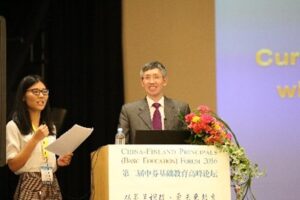
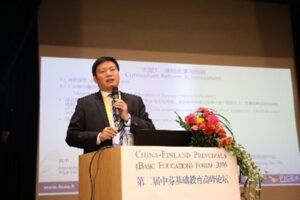
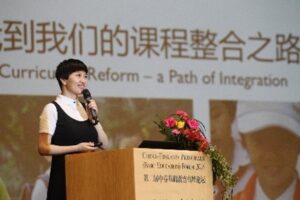
Compared to the reform in NCEE, the reform in basic education is carried out at a larger and deeper scale, especially in primary education. Some schools have adopted the evaluation system of giving students different grades rather than scores. “We are not only evaluating how good the students are at their academic studies, but we are also checking their overall competencies in communication, enduring difficulties, practices, innovation, and adapting to the society, and we also need to see if the students are following the good social norms,” said Mr. Gong.
During the CFP 2016 forum, some other prominent speakers have also given exciting speeches: Mr. Arto Satonen, a member of the Finnish Parliament, said that he hopes the communication and cooperation between Chinese and Finnish education experts can promote the development of education in both countries; Mr. Yuhang Gao, the head of the education section at the Chinese embassy in Finland, said that it was nice to see the CFP 2016 has better organization and performance this year and hope Sino-Finnish educators continuously strengthen the education exchange and cooperation in the future; Ms. Henna Virkkunen, the member of the European Parliament and former Minister of Finnish Education Ministry, pointed out that Finnish education system integrates the Finland and international education advanced ideas and truly based on Finland local culture and history, and these multiple elements create and strengthen Finland education advantages; Mr. Aulis Pitkälä, Director General of Finnish National Board of Education, introduced the core concept, goal, structure, and content of this new round of curriculum reform in Finland; Ms. Arja-Sisko Holappa, the counselor of Education in the Finnish National Board of Education, analyzed that the general concept of Finnish curriculum and the characteristics of Finland national education system; Ms. Leena Kostiainen, the deputy mayor of Tampere city, thanks to the FICEA for organizing this CFP 2016 and this education communication opportunity for Tampere city is grateful and significant; Mr. Xiping Tao, a famous Chinese educator, analyzed the trend of Chinese basic education reform; Mr. Ari Pokka, the president of the 2015-2016 International Confederation of Principals (ICP), presented how to lead the school to the 21th century sustainable development from the school principal perspective; Ms. Riikka Lindroos, the chairman of the Association of Finnish Principals, analyzed the relationship among school, teacher, student and parents. And other education experts and principals from China and Finland government education sectors, universities, basic education schools, and the ICT industry brought professional and wonderful keynote speeches to the attendant principals.